Approaching Remedy for Loss and Damage
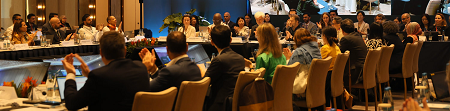
The Fund for responding to Loss and Damage (FRLD) is inching its way toward becoming a source of remedy for harm induced by climate change. The 7th meeting of its 26-member Board (B7) at Manila last October 2025 produced key decisions toward operationalizing the start-up phase plan, a.k.a. the Barbados Implementation Modalities (BIM). That phase will take place with the replacement of several Board members and newly elected co-chairs.
Good News
Four key decisions facilitate operationalizing the Fund:
1. The Board clarified how projects will be selected, adopting funding criteria to guide the Secretariat in their assessment of funding proposals.
2. FLRD has adopted a funding cycle for the BIM to guide the Secretariat to manage proposals.
3. The Board also decided on access modalities, which has determined how developing countries will receive money from the FRLD.
4. The adoption of a list of implementing entities, which are those already accredited to the Green Climate Fund (GCF), Global Environment Facility (GEF) and Adaptation Fund (AF).
Since B7, FRLD’s Secretariat of the FRLD has developed a guide book, terms of reference and template for the call for proposals for the BIM, issued at CoP 30 in Belém, Brazil, in November.
Bad News
The BIM still faces challenges to come up with more-efficient methods of disbursement than the slow and bureaucracy-laden GCF and other available models. This will be especially needed in instances of extreme events such as wildfires, floods and cyclones.
Despite the priority for community-based data and relief emphasized in previous decisions, it is not clear how FRLD will ensure local communities will receive grants directly and under what conditions.
Importantly, FRLD’s Board has not yet developed a long-term plan to raise new money, whereas the current contributions to the Fund fall far short of the estimated US$395 billion needed annually. (That plan will be the subject of the 9th Board meeting in 2026.)
With a total of US$720 million in pledges as of CoP29, but only US$591.21 million currently on hand, the Board is currently allotting funds capped at $500,000 in relief per country, within a total disbursement budget of US$250 million.
World Bank’s Hand
Throughout 2025, observers perceived the heavy hand of the World Bank,the FRLD’s trustee institution, whereas the Bank’s policies and processes are stifling the potential for FRLD to innovate and become more efficient than its predecessors.
NELD
So far, FRLD treats non-economic loss and damage (NELD) as harms that cannot be measured in monetary terms. These may include loss of life, health, culture, identity, biodiversity, Indigenous knowledge, territory, and social cohesion. It correctly identifies that some losses cannot be remedied by monetary compensation. That is why FLRD needs to adopt the UN remedy and reparations framework among its methods, but has not taken steps to do so, despite repeated stakeholder advice to do so.
The FLRD system so far acknowledges irreversible destruction, but responds with voluntary, limited, only financial mechanisms to date. Recognition without structural remedy is symbolic, but not yet functional. Within its proposed function and scope, FLRD has succeeded in naming certain types of harm due to loss and damage, but does not identify corresponding obligations or means of restoration or accountability (restorative justice).
What’s Next?
The next Board meeting (B8) will take place at Livingstone, Zambia, on 22–24 April 2026. That agenda seeks to define the operational modalities of the Fund, which will include tailored interventions for vulnerable countries, particularly in Africa, while focusing on community-led approaches and rapid-response mechanisms. It will also review Fund’s the relationship with the World Bank and establish additional rules of procedure for effective governance.
As currently scheduled, the first batch of funding proposals must be received in the Secretariat up until 15 June 2026. For guidance, see the following resources:
FRLD, “Funding Request Template for the Barbados Implementation Modalities”;
FRLD, “Technical Guide on Averting, Minimizing and Addressing Non-Economic Losses in the Context of Human Mobility”;
German Ministry of International Cooperation, Guidebook: Writing a Green Climate Fund Funding Proposal;
The Loss and Damage Collaboration, Loss and Damage Response Toolkit.
Photo: FLRD Board in session. Source: FRLD.
|