|
|
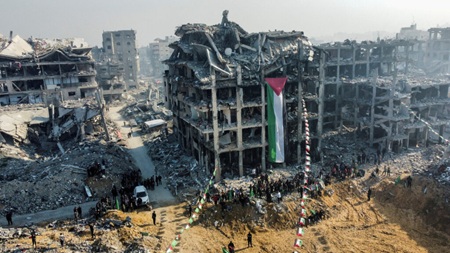
O, People of Good Conscience
How many times have we heard persecuted Palestinians call for rescue by crying out “يا جماعة خير” (o, decent people) reaching out to the world’s few remaining humans of good conscience. This is the same call to “all men and women of goodwill,” echoed in the Pope Leo XIV’s recent encyclical on safeguarding the human person
More
|
|
|
|
|
Justice, Reconstruction’s Foundation
Urban planning is essential to reconstruction, a regionwide priority. Essential too is a disciplined human rights approach to sustainable development.
Reconstruction is an advanced-phase response to the impacts of natural, human-caused, or human-exacerbated disaster. It follows foregoing phases of “rescue,” “relief,” and “early recovery” on the road to eventual “sustainable development” and the corresponding obligation of states to ensure “the continuous
More
|
|
Lessons of Urban Warfare
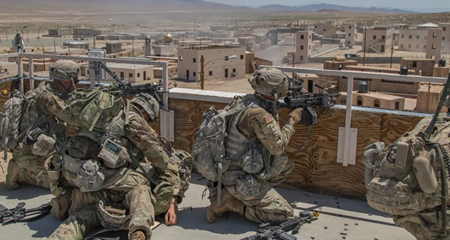 Since the Second World War, the countries of southwest Asia and North Africa have been battlegrounds in the sphere of U.S. and European hegemony over the territory of the former Ottoman Empire. Whether under occupation and colonization as in Palestine and Western Sahara, or through invasions and arming proxy militias to destabilize the region into a state of perpetual crisis,
More
Since the Second World War, the countries of southwest Asia and North Africa have been battlegrounds in the sphere of U.S. and European hegemony over the territory of the former Ottoman Empire. Whether under occupation and colonization as in Palestine and Western Sahara, or through invasions and arming proxy militias to destabilize the region into a state of perpetual crisis,
More
|
|
Arab State Development at the High-level Political Forum
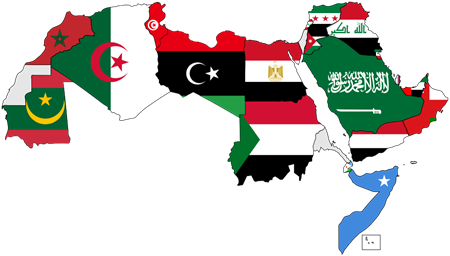 The High-level Political Forum at UN Headquarters in New York, 7–16 July 2026, will be a big one for the southwest Asia and North African countries. This year, an unprecedented eight Arab states will be presenting their Voluntary National Reviews (VNRs) for consideration: Algeria, Bahrain, Egypt, Jordan, Saudia Arabia, Somalia, Tunisia and United Arab Emirates (UAE).
Algeria and Somalia will be
More
The High-level Political Forum at UN Headquarters in New York, 7–16 July 2026, will be a big one for the southwest Asia and North African countries. This year, an unprecedented eight Arab states will be presenting their Voluntary National Reviews (VNRs) for consideration: Algeria, Bahrain, Egypt, Jordan, Saudia Arabia, Somalia, Tunisia and United Arab Emirates (UAE).
Algeria and Somalia will be
More
|
|
Systemic transformation now and forever!
 A Common Political Action Agenda in Near East and North Africa (NENA)
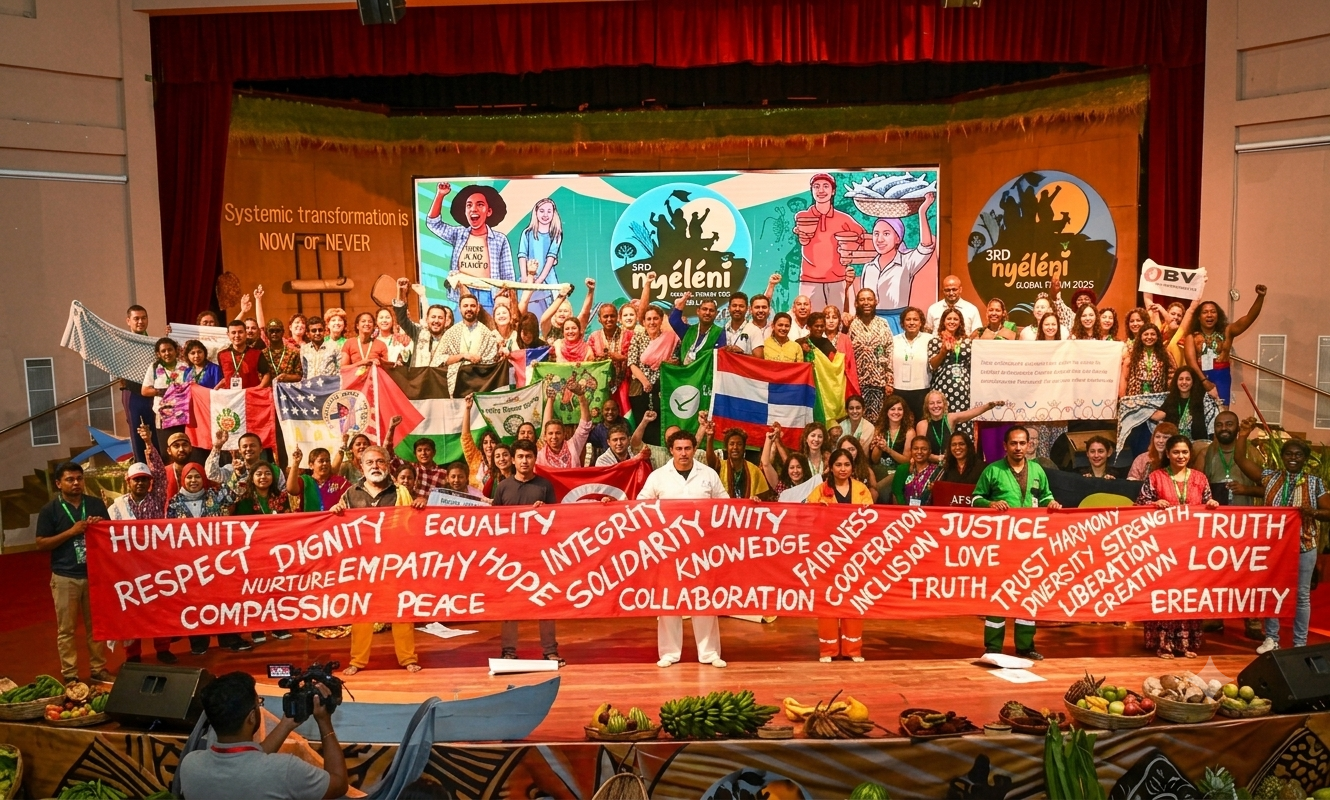
The Food Sovereignty International Planning Committee (IPC) has for 30 years convened diverse farmers, fishers, civil society organizations, social movements, and Indigenous Peoples organizations engaged with food issues and rights of small-scale food producers. After six years of planning, IPC organized the Third Nyéléni Global Forum (Nyéléni III) last
More
A Common Political Action Agenda in Near East and North Africa (NENA)
The Food Sovereignty International Planning Committee (IPC) has for 30 years convened diverse farmers, fishers, civil society organizations, social movements, and Indigenous Peoples organizations engaged with food issues and rights of small-scale food producers. After six years of planning, IPC organized the Third Nyéléni Global Forum (Nyéléni III) last
More
|
|
|
|
|
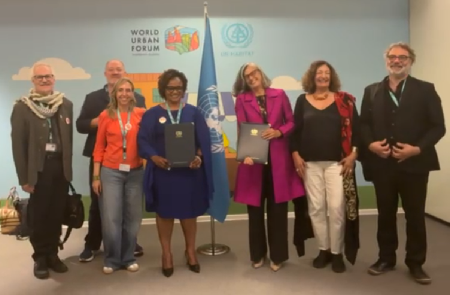
HIC and UN Habitat Sign New MoU
In the context of the 13th World Urban Forum at Baku on 20 May 2026, Habitat International Coalition (HIC) and the United Nations Human Settlements Programme (UN-Habitat) signed a historic Memorandum of Understanding (MoU), a non-binding framework for cooperation to advance adequate housing, land tenure, and basic services for all through a rights-based and participatory
More
|
|
Go Green Sudan
 Go Green Sudan — For a Better Living Environment
An Environmental Platform for a Green Community Mindset
In Sudan, trees are being cut down at an accelerating rate to obtain fuel, shelter, and means of survival, posing a long-term threat to environmental balance and to the longer-term well-being of communities. This silent environmental disaster requires urgent attention and integrated action.
A Silent Environmental
More
Go Green Sudan — For a Better Living Environment
An Environmental Platform for a Green Community Mindset
In Sudan, trees are being cut down at an accelerating rate to obtain fuel, shelter, and means of survival, posing a long-term threat to environmental balance and to the longer-term well-being of communities. This silent environmental disaster requires urgent attention and integrated action.
A Silent Environmental
More
|
|
|
|
|
Seven Months in Kashmir
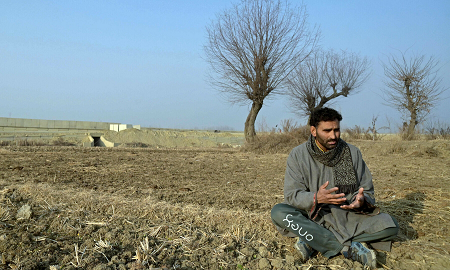 This report covers the Indian-occupied territory of Kashmir by type of housing and land rights violation over the past seven-month period of reported violations (October 2025–April 2026). This structure makes visible the underlying occupation policy architecture as it systematically deprives the Kashmiri people—in particular, the Indigenous Muslim majority—of its habitat.
To understand the longer-term patterns of the Indian occupation’s violations of
More
This report covers the Indian-occupied territory of Kashmir by type of housing and land rights violation over the past seven-month period of reported violations (October 2025–April 2026). This structure makes visible the underlying occupation policy architecture as it systematically deprives the Kashmiri people—in particular, the Indigenous Muslim majority—of its habitat.
To understand the longer-term patterns of the Indian occupation’s violations of
More
|
The Development Agenda’s Forced Evictions Gap
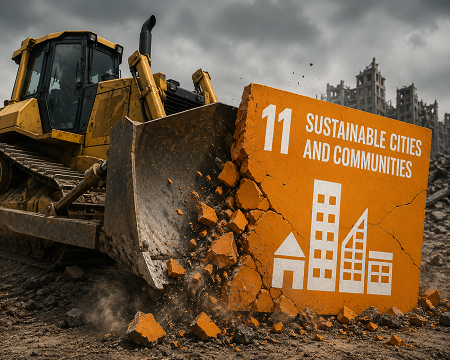
Eviction, forced displacement, and tenure insecurity were actively discussed during the negotiations of the 2030 Agenda, but they were not codified explicitly in SDG 11. Instead, they were either excluded, subsumed, diluted, and redistributed across broader targets (especially 1.4 and 11.1) and other SDGs due to political, technical, and institutional pressures.
In the 2030 Agenda negotiations, human rights mechanisms (e.g., two
More
|
|
Azerbaijan
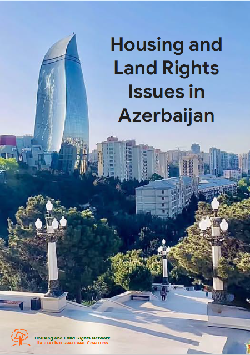
On the occasion of the 13th World Urban Forum (WUF13), 17–22 September 2026, HIC-HLRN has prepared this new report to summarize the main housing and land rights issues since 2000 in Azerbaijan, the WUF13 host country. Housing and Land Rights Issues in Azerbaijan reviews events and developments, exploring the discrepancies between administrative practice and relevant law, including Azerbaijan’s Constitution, legislation
More
|
|
HIC @ WUF13
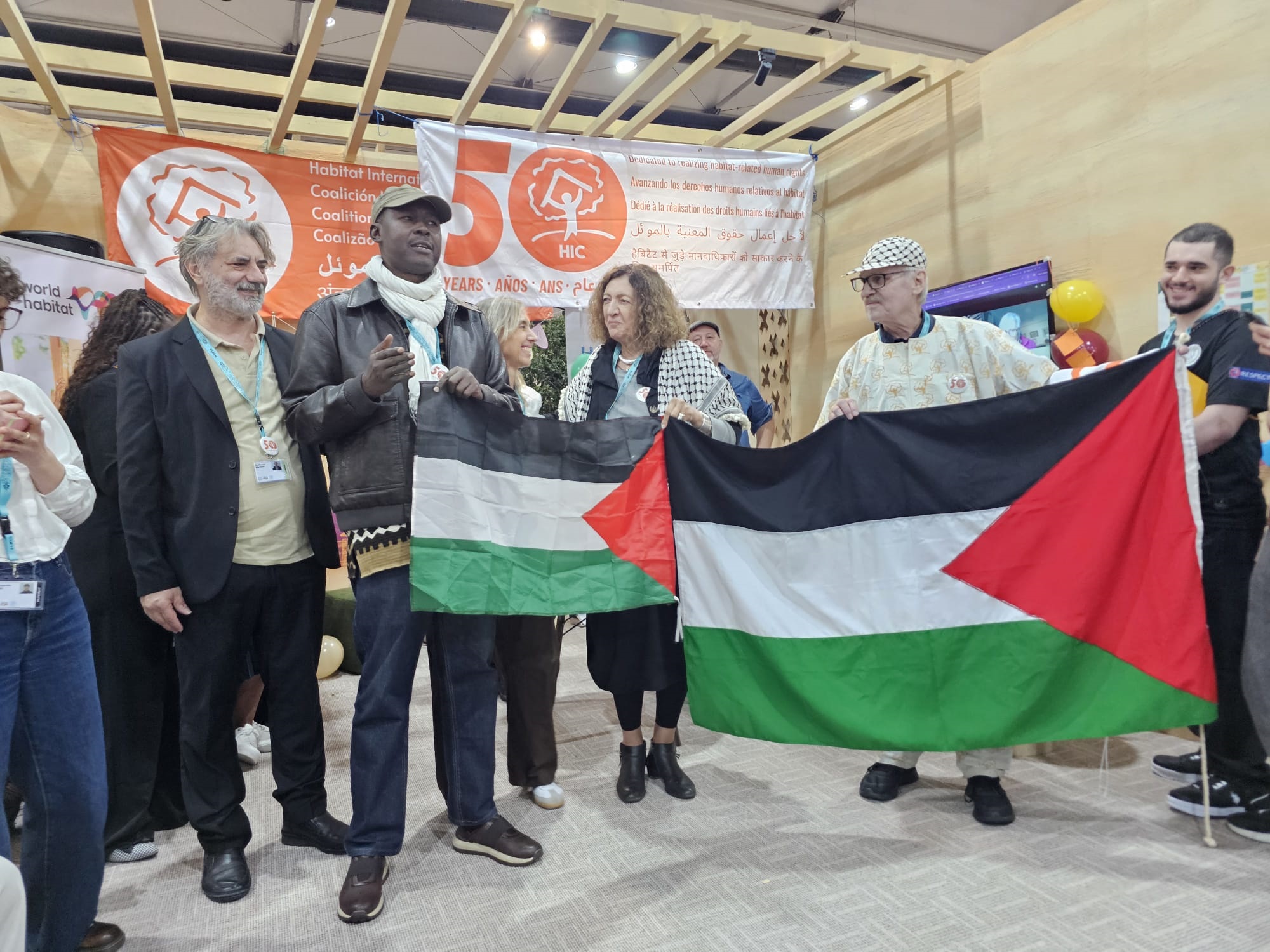
The World Urban Forum (WUF) is the premier global event organized every other year by UN Habitat and a host city to provide promotional, networking and learning spaces for UN Habitat stakeholders to convene for a week of diverse events. This biennium, Baku, Azerbaijan was the host city for the 13th WUF, convened under the theme “Housing the world: Safe
More
|
|
HIC Advocates for the Urban Food Insecure
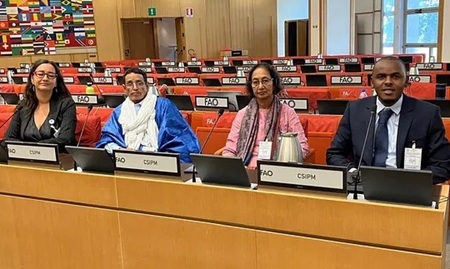
HIC continues to be an advocate for the urban food insecure constituency in the Civil Society and Indigenous Peoples Mechanism (CSIPM) for relations with the Committee on World Food Security (CFS). As the principal UN policy-making body for the Rome-based implementation agencies (FAO, IFAD and WFP) concerned with food and agriculture, CFS underwent a major reform in 2009, which resulted
More
|
|
Green Evictions
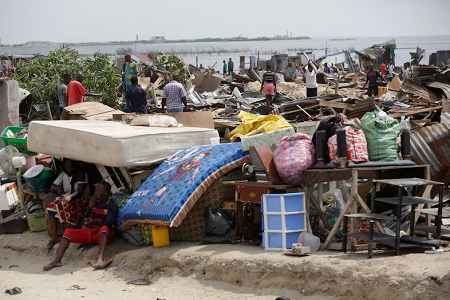
Informal settlement communities are increasingly displaced in the name of environmental protection, climate adaptation, and disaster risk reduction. From flood mitigation projects in Latin America to conservation zones in Africa and coastal resilience programs in Asia, environmental concerns are weaponized to justify evictions that violate human rights and perpetuate urban inequality.
While genuine environmental risks demand action, the dominant response—forced evictions
More
|
|
Toward Reforming FAO and Resisting Corporate Capture
Over the past decade, the policies of the Food and Agriculture Organisation of the UN (FAO) have significantly regressed in respecting and promoting the Strategic Partnership with Civil Society Organizationsand social movements adopted in 2013, which focuses on five strategic objectives to eliminate poverty and food insecurity. Therein, FAO had pledged to build an enabling environment for dialogue between governments
More
|
|
|
|
|
|
|
|
|
| Audio Summary |
|
|
| Terminology Corner |
| Contributors to this Land Times |
|
|
|
|